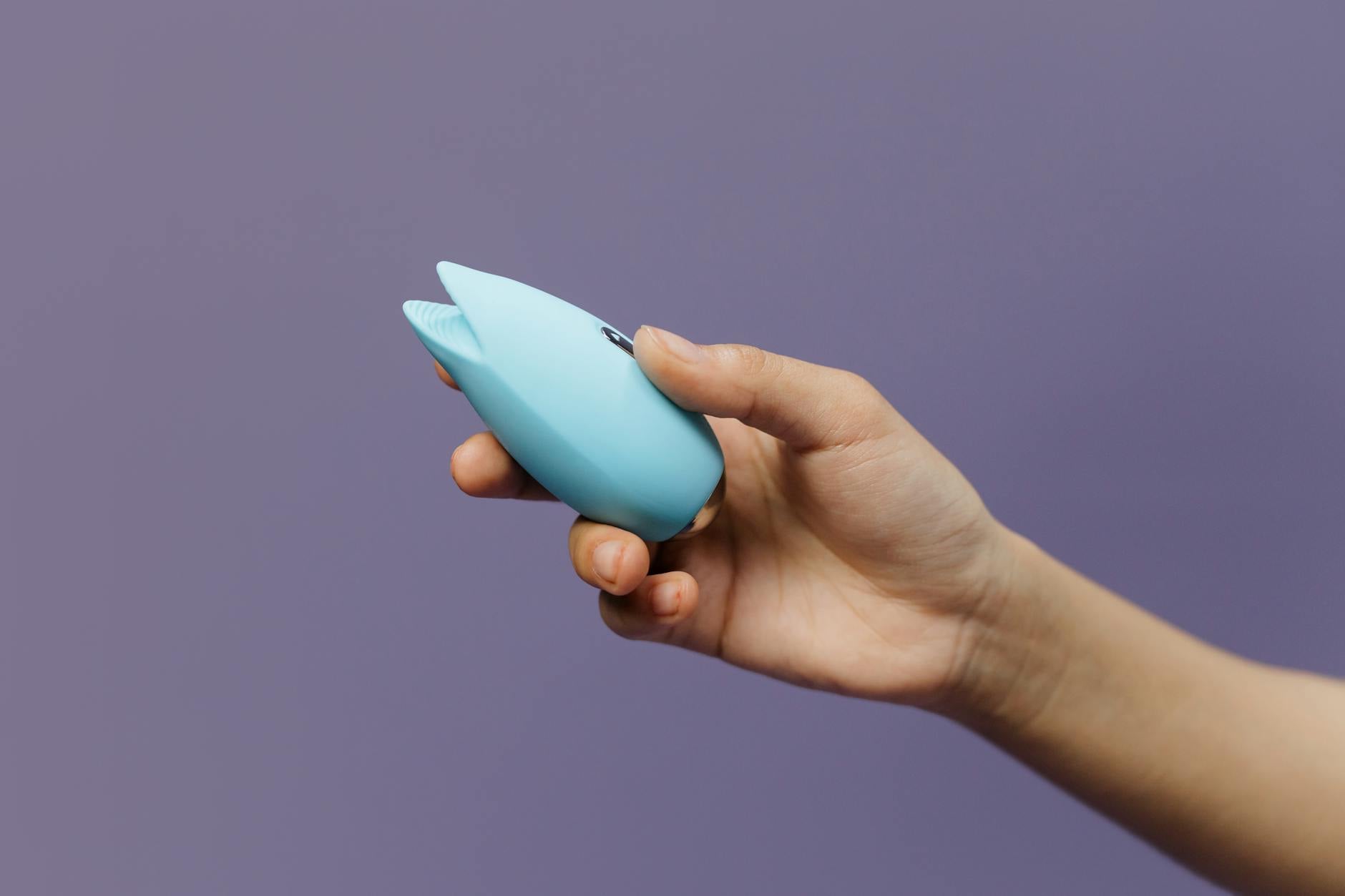
How to Use a Lemon Vibrator When You Feel Rushed or Pressured for Orgasm
Orgasm isn't a finish line. When a partner, timeline, or your own expectations turn pleasure into performance, a lemon clitoral vibrator can help you take back control.
Honestly, this is the pressure most people never talk about openly. You're with a partner. Things are building. And somewhere in your body, a small voice says: "I should be feeling this more. This should be happening by now. What's wrong with me?"
When you feel rushed or like orgasm is expected, your body doesn't have the safety it needs to let go. Your parasympathetic nervous system, the one responsible for arousal and pleasure, goes offline. Instead, your sympathetic nervous system takes over. Fight, flight, or freeze. Your clitoris, which is one of the most sensitive parts of your body, responds to that shift by tensing up or going numb.
This isn't psychological weakness. It's biology. Your body is protecting itself because the environment doesn't feel safe. That's not a flaw. That's smart.
The irony is that trying harder makes it worse. The more you focus on orgasm as a goal, the further away it gets. Research on sexual response shows that goal-focused thinking during sex actually reduces arousal and dampens sensation. It's like trying to fall asleep by reminding yourself that you need to sleep. You're working against yourself.
Here's what shifts when you bring a lemon sucker or other lemon vibrator into solo play around this issue. First, you remove the performance aspect entirely. There's no partner watching, no timeline to meet. The experience becomes about sensation, not outcome.
Second, the suction and vibration pattern of a lemon clitoral vibrator creates consistent, focused stimulation that's difficult to achieve with a hand or partner touch alone. Consistency matters when you're working with a nervous system that's been in protective mode. Your body can finally relax into the pattern instead of bracing against interruption or variation.
Third, and this is key, using a lemon vibrator solo teaches you what your own pleasure actually feels like when there's zero external pressure. You get to learn your body's map without an audience. That knowledge becomes your anchor. Later, if you're with a partner, you know what you need and can ask for it clearly.
Remove the timeline. Schedule 30-45 minutes when you're alone and nobody needs anything from you. Not 10 minutes. Not "whenever." A real window. Your nervous system relaxes when it knows you have time.
Set the environment. Dim light, comfortable temperature, door locked, phone on silent. Your job is to signal to your body that this space is safe. It doesn't have to be fancy. It just has to be yours.
Decide in advance that this session is about sensation, not orgasm. This is not a performance. You're not trying to "achieve" anything. If orgasm happens, great. If it doesn't, that's also information. The goal is to tune in, not to cross a finish line.
Start slow. Set your lemon clitoral vibrator to one of the lower patterns. Many people think they need intensity when they're dealing with numbness or sensation changes. Actually, intensity can add more pressure and tension. Lower patterns, used for longer, often work better.
Spend time exploring. Touch other parts of your body first. Notice what feels good. Your inner thighs, your breasts, your neck. This isn't foreplay to get somewhere else. This is actual pleasure. When you bring the vibrator in, you're adding to something already happening, not starting from scratch.
When you do use your lemon vibrator on your clitoris, vary the pattern occasionally, but not obsessively. Sometimes staying with one pattern for 5 or 10 minutes lets sensation build instead of chasing it around. Try pausing. Build up, then pause. Build up again. This creates rhythm and teaches your body that pleasure is not a straight line to an endpoint.
If you're using solo play with a lemon vibrator to work through this, that's completely separate from partnered sex for now. Don't bring the pressure in there yet. Build your own foundation first.
Once you've spent time learning what your body responds to in a low-pressure environment, you can then talk with a partner about it. Not during sex. Beforehand. "I've noticed that when I feel like I need to orgasm on a timeline, I actually go numb. I need us to take that off the table. Let's focus on sensation instead." That conversation is harder than just suffering through, but it's the actual solution.
Many partners respond well to this when it's framed as removing pressure from both people. Most people don't actually enjoy the anxiety of waiting for a partner to orgasm. Removing that expectation often improves sex for everyone involved.
Orgasm isn't the point of pleasure. Orgasm is something that might happen as a result of pleasure, but it's not the goal. When you separate those two things, everything shifts. Your solo sessions with a lemon vibrator become about noticing sensation, building arousal, exploring what feels good. Orgasm, if it comes, is a bonus. But the real win is the time you spent in your body without judgment.
That's where the real healing happens. Not in the orgasm itself, but in giving yourself permission to take your time. To feel without performing. To explore without timeline pressure.
Many people find that when they stop chasing orgasm, orgasm actually becomes easier. Your body relaxes. Your nervous system comes online. Pleasure builds naturally instead of being forced. This is not a trick or a hack. It's how your body is designed to work when it feels safe.
Your nervous system is doing its job. When you feel watched, judged, or on deadline, your body perceives a threat to safety. It pulls back from sensation to protect you. This isn't weakness or dysfunction. It's a survival response. The answer is to rebuild the sense of safety, not to push through the numbness.
Yes. Lemon clitoral vibrators, including suction-based designs, create consistent stimulation that helps your body relax into sensation instead of bracing against it. The pattern doesn't change unexpectedly, and you control the pace entirely. That consistency is calming to a nervous system that's been in protective mode.
Some people notice a shift in the first session. Others need 2-3 weeks of regular solo play before they feel their baseline sensation return. Your timeline depends on how long you've been dealing with pressure and how deeply your nervous system has learned to protect itself. Patience here actually speeds things up. Impatience reintroduces the pressure.
Only if you want to. Solo exploration is for you. That said, if your partner notices a change, having context helps. You might say something like: "I've been taking more time to reconnect with my own body, and it's helping me feel more present." You don't owe anyone a detailed explanation of your solo practice.
Then your nervous system needs more time in safety. That's not failure. That's information. Keep showing up for yourself. Keep exploring without the goal. Some people find that orgasm never comes back to them solo, and that's okay. What matters is that sensation returns and pleasure is possible without performance pressure. Orgasm isn't the only measure of success.
Absolutely. Partnered use of a lemon clitoral vibrator can actually lower pressure because the focus shifts to the sensation the vibrator creates rather than what your partner is doing "wrong." Many people feel less pressure to orgasm when a vibrator is involved because everyone's expectations are clearer.
Using a lemon vibrator when pressure is the real issue isn't just about solo play. It's about learning that your pleasure is worth prioritizing. That your body deserves safety and time. That orgasm is optional, but sensation and safety are not.
When you spend time with your own body without pressure, you become a better communicator about what you need. You stop apologizing for your nervous system. You start asking for what actually works. That changes everything. Not just your solo experience. Your partnered experience too.
Start with 20 minutes alone. A lemon vibrator. No goals. See what happens when you give yourself permission to just feel.