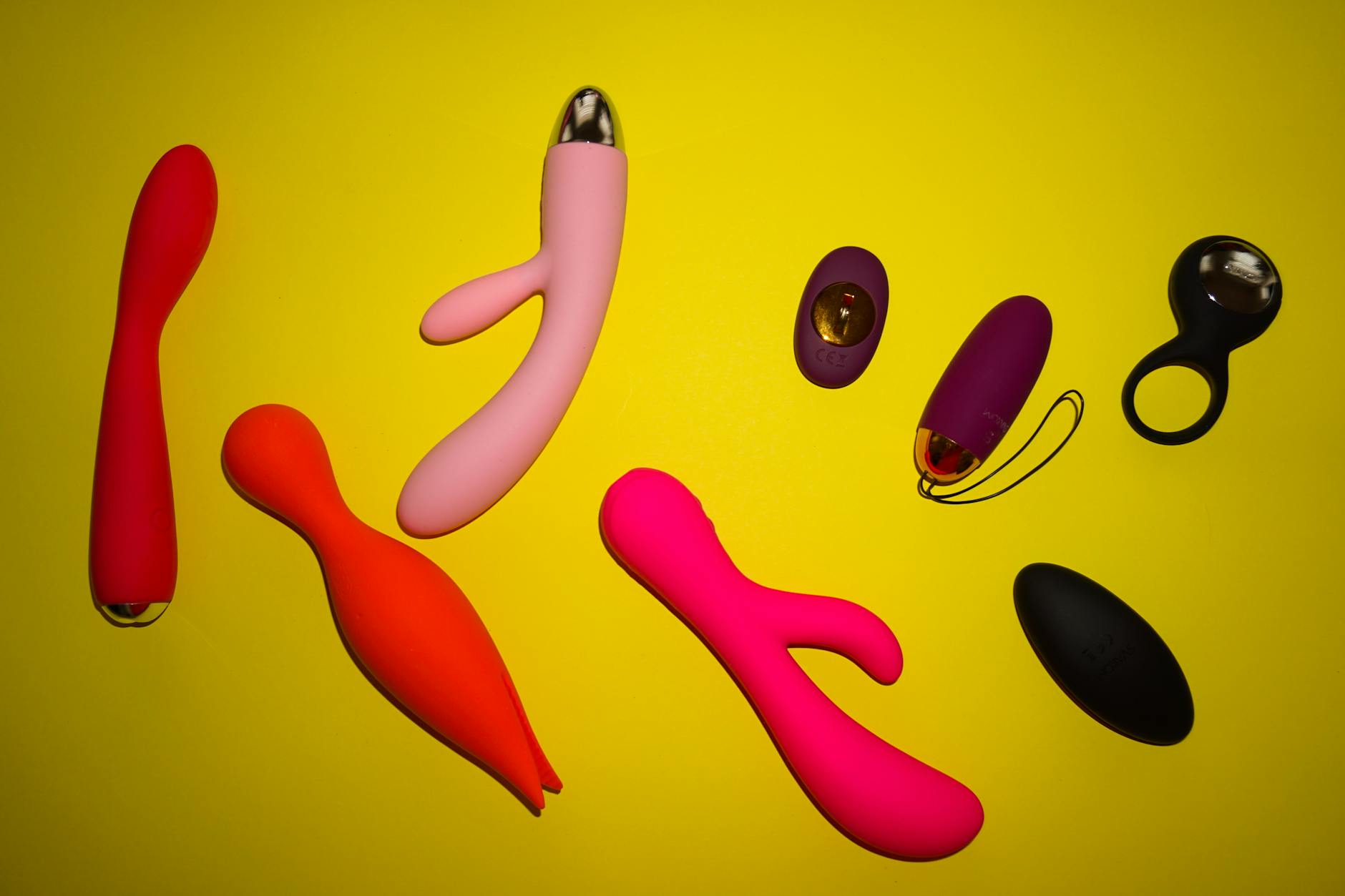
How to Use a Lemon Vibrator When You Feel Disconnected From Your Body
Body dissociation during sex is more common than you think. Here's how clitoral vibrators help you rebuild the bridge between your mind and physical sensation.
You're in the moment. Your partner is present. Everything should feel good. Instead, you're floating above yourself, watching the scene from a distance, unable to feel much of anything. That's body dissociation during sex, and it's not rare.
Dissociation is your nervous system's way of protecting you from overwhelm, pain, or threat. It can show up during sex for reasons that have nothing to do with your partner or the situation itself. Stress, past trauma, anxiety, depression, or even just a long stretch of disconnection from your body can all trigger it.
Here's what matters: you can rewire this. And lemon clitoral vibrators are one of the most effective tools I've recommended to clients rebuilding physical presence.
Sensation and presence go together. When your brain has learned to check out, your body follows. You might feel numbness, a floating sensation, or like you're watching yourself rather than living the experience. Some people describe it as pressure without pleasure, or the physical mechanics happening but the emotional connection missing entirely.
This isn't weakness. It's not a flaw in your desire. Your nervous system has decided safety means distance. Rebuilding that connection takes intentional, gentle rewiring.
The piece most people get wrong: you can't think your way out of dissociation. You have to feel your way out. That's where a lemon vibrator becomes crucial. The consistent, focused stimulation from a clitoral vibrator gives your nervous system clear sensory data to anchor on. It's harder to float away when your body is sending very specific, very present signals.
Dissociation lives in your nervous system, not your thoughts. When you use a lemon clitoral vibrator, the suction and vibration patterns activate nerve endings in the clitoris at a level of intensity that demands your attention. Your brain can't simultaneously be present with strong physical sensation and floating in dissociation. The two are neurologically incompatible.
That doesn't mean you force yourself to stay present. That defeats the purpose. Instead, the vibrator's rhythm becomes an anchor. When you notice you're drifting, you have something concrete to return to, something that's actively signaling to your nervous system that pleasure is happening right now.
Over time, these moments of presence build. Your nervous system learns it's safe to inhabit your body during sex. The dissociation loosens its grip.
Reconnecting with your body works best when there's no pressure, no partner timeline, no performance expectations. That's why I recommend starting with solo exploration using a lemon vibrator.
Set aside 20-30 minutes when you're rested and have complete privacy. No phones, no distractions, no agenda beyond noticing what you feel.
Start with the vibrator off. Hold it. Notice the weight, the temperature, the texture. Let your nervous system register something novel without activation. This is not foreplay. This is getting familiar.
When you're ready, turn it on at the lowest intensity setting. The Lem vibrator's suction patterns are particularly effective here because they're distinct and sustained. You'll feel a clear difference between each pattern.
The goal is not orgasm. The goal is noticing. Where do you feel it? What's the sensation? Does it change if you shift your position slightly? When your mind wanders (it will), that's fine. Just notice that it wandered, and come back to what your body is feeling.
Do this three to four times before moving to partner sex or more intense stimulation. Your nervous system needs repetition to build new pathways.
When you're working through dissociation, your body will send two kinds of signals. Learn to recognize them both.
Greening signals mean your nervous system is online. You might feel warmth, tingling, a sense of building intensity, or even tears (tears often mean something is moving). Your breath might deepen. These are signs your body is present.
Red signals mean you're starting to disconnect or your nervous system is feeling unsafe. These might be numbness, that floating sensation, a sudden chill, or tension in your jaw or shoulders. Some people feel a wall between their mind and body.
When you hit a red signal, pause. This isn't failure. You're learning your nervous system's language. Sometimes the answer is slowing down and using the vibrator at a lower intensity. Sometimes it's taking a break and trying again tomorrow. Sometimes it's a conversation with your partner about what you need.
The key is responding with curiosity, not frustration.
Once you've built some solo practice, partnered sex becomes an opportunity to extend that reconnection. But the transition matters.
Start by letting your partner know what you're working on. You don't need to detail trauma or pain. Something like "I sometimes feel checked out during sex, and I'm rebuilding that connection. I'd like to use a vibrator to help me stay present" is enough.
Then, in the moment, take the lead. Use the vibrator on yourself while your partner is there but giving you space. You're the one managing sensation and presence. Your partner's role is to follow your rhythm, not create it.
Some people find it helps to have their partner create a point of contact elsewhere. Holding your hand. Foreheads touching. Skin-to-skin connection without pressure for performance.
As you build confidence in your presence, you can expand. Some couples find that having a partner hold the vibrator brings a different dimension of reconnection. But that only works when you've already built the internal confidence that you can stay present with sensation.
If you're dealing with significant trauma, PTSD, or persistent dissociation that shows up across multiple areas of life, a vibrator is a helpful tool but not a standalone solution. A trauma-informed therapist, ideally one trained in somatic (body-based) approaches, is worth the investment. Therapies like EMDR, somatic experiencing, or sensorimotor psychotherapy are specifically designed to help your nervous system rebuild its ability to stay present.
A vibrator works best as part of a larger toolkit that might include therapy, grounding exercises, breathwork, and partner support.
Reconnection isn't linear. Some weeks you'll feel present the whole time. Other times you'll drift halfway through and notice it. That's not backsliding. That's your nervous system learning to catch itself, which is actually progress.
Keep using the vibrator consistently, even when you feel present. Your nervous system needs repetition to solidify new patterns. It typically takes four to eight weeks of regular practice before dissociation during sex becomes genuinely rare.
The lemon clitoral vibrators like the Lem are engineered for exactly this work: sustained, focused stimulation that's distinct enough to be impossible to ignore. The suction patterns activate the clitoris in ways that demand presence.
Your body hasn't abandoned you. It's just learned to protect itself. And with patience, intention, and the right tools, you can teach it that presence is safe again.
Not necessarily. Dissociation is a nervous system response, not an attraction question. You can be deeply attracted to someone and still dissociate because of stress, past trauma, depression, or learned patterns of disconnection. Attraction and presence are separate. A lemon vibrator helps rebuild presence. If attraction is genuinely absent, that's a different conversation with your partner.
Absolutely. In fact, the consistent, focused sensation from a clitoral vibrator is specifically helpful for numbness. Start at lower intensity and work up. Your body's sensation receptors often wake back up faster with repeated, clear stimulation than without it.
Simply and directly: "I sometimes feel disconnected during sex. Using a vibrator helps me stay present and actually feel what's happening. It's not about you or your abilities. It's me retraining my nervous system." Most partners appreciate clarity over vague frustration. Consider reading an article together so they understand what dissociation is and why the tool helps.
This is a common worry. The answer is no. Vibrators don't create dependency because orgasm itself isn't the variable. What changes is your nervous system's baseline. As you rebuild presence and confidence, most people find they can experience pleasure across a broader range of stimulation. The vibrator is a bridge, not a permanent requirement.
That's information, not failure. Sometimes it means you need more solo practice before partnered sex. Sometimes it means the timing isn't right that day. Sometimes it means you need additional support from a therapist. Disconnection that persists despite consistent practice with a lemon vibrator is worth discussing with a therapist who specializes in somatic or trauma work.
Most people notice subtle shifts within three to four weeks of regular solo practice. The floating sensation becomes less automatic. You catch yourself drifting and come back faster. Real, measurable reconnection usually takes six to eight weeks of consistent practice. Your nervous system isn't fast at rewiring, but it's reliable.
Your body is still yours. Dissociation isn't a permanent feature. It's a protective habit your nervous system learned, and habits can be rewired. A lemon vibrator gives you a concrete, reliable tool for that rewiring. The sensation is real. The presence you're rebuilding is real. And your capacity for pleasure is waiting on the other side of reconnection.
If you're ready to explore tools designed to support this kind of work, we're here. If you have questions about how lemon vibrators can fit into your specific situation, reach out to us at /contact. Your nervous system's journey back home is worth the investment.