
The conversation you're avoiding
Let's be real. Many couples sit across from my office knowing something's missing in their intimate life, but they can't name it. The words jam up. One partner worries about hurting feelings. The other feels judged before anything's even said. So nothing gets said, and the silence becomes its own barrier.
Introducing a lemon clitoral vibrator into that stuck space isn't about fixing the sex. It's about giving you both a way to talk about sex when talking has felt impossible.
Why communication breaks down around pleasure
Here's what I see repeatedly: couples default to one of two modes. Mode one is avoidance. You don't bring it up because you're scared of the answer or afraid your partner will think you're unsatisfied. Mode two is resentment disguised as logistics. "I just don't think we connect anymore" stands in for the harder truth: "I need you to pay attention to what actually gets me going."
Neither mode creates safety. And without safety, introducing toys feels risky. Your partner might interpret it as criticism. You might feel exposed. A lemon vibrator sitting between you suddenly represents all the things you haven't been able to say.
But here's the clinical insight that matters: the toy itself can become a translator. It gives you both something external to focus on, which weirdly makes the vulnerability less raw. You're not saying "you're not enough." You're saying "let's try something together." Completely different energy.
The setup conversation that actually works
Don't ambush this. Don't leave it on the nightstand like a hint. The conversation has to come first, and I recommend doing it outside the bedroom. Sitting on the couch. Maybe while cooking. Definitely not during sex when emotions are already high.
Start like this: "I've been thinking about us, and I want to explore something together. I found this clitoral vibrator called the Lem, and I'm curious if you'd be interested in trying it with me. Not instead of anything we do now. With."
That phrasing does three things. It centers you as curious, not critical. It names the specific tool (the Lem is worth mentioning because people respond better to a real thing than a vague "toy"). And it explicitly signals partnership.
If your partner's first reaction is hesitation, don't push. Ask what the hesitation is. Sometimes it's "I'm worried I'll feel replaced." Sometimes it's "I don't know how to use something like that." Sometimes it's shame or inexperience. The reason matters because it changes how you move forward.
Using the lemon vibrator when one partner is nervous
If this is new territory for both of you, start solo first. Yes, solo. I know that sounds counterintuitive when the goal is togetherness. But research on couples and shared pleasure shows that when one or both partners are anxious, having a solo exploration phase actually accelerates trust.
Spend a few sessions learning your own response to the lemon vibrator. How does it feel at different intensities? Where does it land best for you? What patterns feel good? Once you know your own landscape, you're not discovering it in real time with your partner watching. You're confident. That confidence is genuinely attractive and changes the dynamic completely.
Then, invite your partner to watch. Not to perform for them, but to let them in. This is the conversation bridge. They see you responding to pleasure. You're literally demonstrating what works for your body. It removes the guessing game that deadlocks so many couples.
Creating safety when using toys together
The first time you use the lemon vibrator as a couple, agree on a few things beforehand.
First, establish that saying "stop" or "pause" isn't rejection. It's information. If either of you needs to slow down, the toy goes off, and you check in. No judgment, no offense. This is the foundation of safety.
Second, keep talking. Don't go silent and pretend sex is happening. A running commentary is weirdly intimate: "That feels good." "Try it a little higher." "I love watching you like this." The words are the real connection. The lemon vibrator is just the facilitator.
Third, decide in advance whether this is solo pleasure or mutual. Some couples use the Lem as foreplay before partnered sex. Others use it as the main event, with the partner involved in other ways (hands, oral, their presence). There's no right way. There's only what works for your bodies and your dynamic.
What happens after the first time
Here's what couples don't expect: awkwardness. You'll probably feel it. You tried something together, and now there's this small shared memory that's both intimate and slightly weird because it was new. That's completely normal.
The mistake is treating the awkwardness as failure. It's not. Awkwardness means you both tried. It means you both were brave enough to move toward each other instead of away.
I recommend checking in the next day. Not immediately after, not in the heat of it. The next morning over coffee: "I'm glad we did that. How did it feel for you?" That conversation, the follow-up, is often more important than the experience itself. It normalizes what you did. It opens the door to more communication.
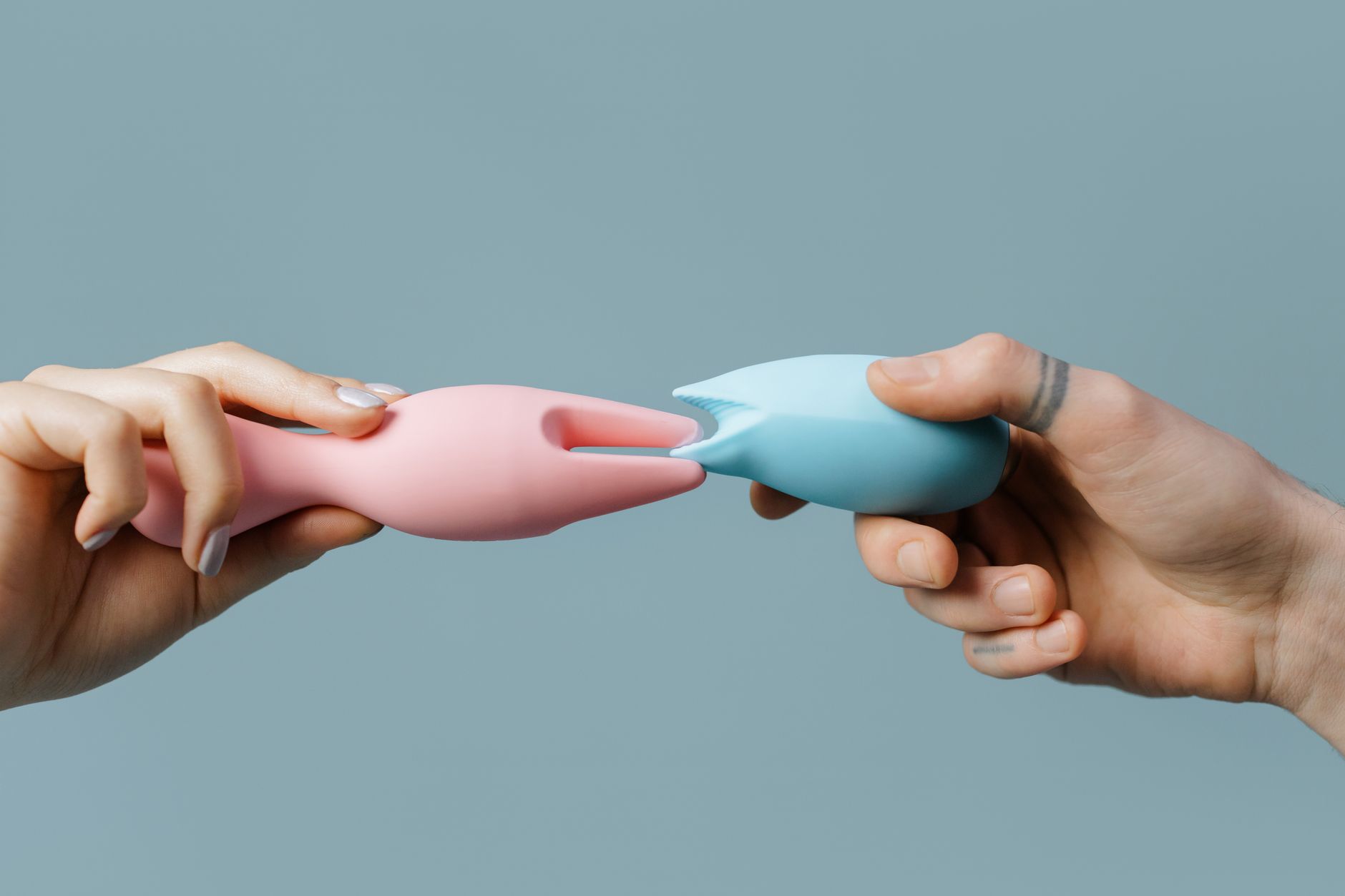
Photo by cottonbro studio on Pexels
When one partner has resistance
Sometimes the other person stays shut down. They're polite but clearly uncomfortable. They go along with it, but you can feel their distance.
That's information, and it matters. Resistance often means something deeper is happening. Maybe they feel insecure about their own desirability. Maybe they're worried about their sexual performance. Maybe they learned growing up that pleasure isn't safe or okay. A lemon clitoral vibrator won't fix any of that.
What it can do is give you both a non-threatening object to discuss those feelings around. "When I brought up the vibrator, I felt you pull back. What came up for you?" That's the conversation that matters. The toy is just the entry point.
If resistance persists, couples therapy isn't weakness. It's a translator for this exact kind of stuck conversation. A professional can help you both understand what's underneath the hesitation and rebuild from there.
The long game
Using a lemon vibrator as a couple isn't about novelty or fixing a broken sex life in one night. It's about demonstrating that you can talk about what you need. It's about showing up for each other's pleasure, not just performance. It's about saying without words: "I want to know you. I want you to know me."
Once you've crossed that bridge together, you've changed something fundamental. The next conversation about intimacy is less scary. The next time you want to try something else, you have a template for how to ask. The vulnerability you showed by introducing the Lem becomes proof that your partner can handle the real you.
If communication has been the wall between you, the lemon vibrator is permission to start talking. The actual pleasure? That's just the bonus.
People Also Ask
How do I bring up toys to my partner without them thinking I'm unhappy?
Frame it as curiosity and partnership, not criticism. Say something like: "I've been thinking about ways to explore pleasure together, and I'm interested in trying this with you." The key word is "together." You're not saying they're not enough. You're saying you want to expand what you do together.
Should we use the lemon vibrator if my partner has erectile dysfunction?
Absolutely. In fact, many couples find that introducing a clitoral vibrator like the Lem actually reduces pressure on the partnered person because pleasure isn't dependent on one specific type of function. It opens up more possibilities for mutual enjoyment and can reduce performance anxiety for both people. The focus shifts from one outcome to shared exploration.
What if my partner wants to use the lemon vibrator on me but I'm nervous?
Nervousness is fine. Start by using it on yourself while they watch. Let them see how it feels for you and what your response looks like. Then, if you want to, guide their hand. You're in control of the pace and pressure. There's no rush to hand over control until you're ready. Communication during this process is everything.
Can using the Lem together help rebuild intimacy after infidelity?
It can be part of rebuilding, but it's not a fix on its own. Infidelity breaks trust, and toys don't repair that. What they can do is create a new shared experience that feels safe and collaborative. But the deeper work of rebuilding trust has to happen in conversation and often with professional support.
How do we know if it's a communication problem or a compatibility problem?
The difference is this: if you can't talk about sex, you probably don't know if you're compatible on sex. Communication problems hide incompatibility. Start by fixing the communication. Have the conversations. Explore together. Then, once you can actually talk about what you need, you'll know whether you both want the same things. Sometimes you do. Sometimes you don't. But at least you'll know.
What if introducing the lemon vibrator makes things worse?
It can, if the underlying issue is mistrust or resentment that goes deeper than sexual communication. If bringing up the vibrator sparks a huge fight, that's information. It means there's something underneath that needs to be addressed first. A couples therapist or relationship coach can help you identify what that is and work through it before trying to layer in physical exploration.
The conversation is the point
I want to be clear about something. Using a lemon clitoral vibrator together isn't the goal. The goal is having the conversation that the vibrator makes possible. It's proving to each other that you can talk about something vulnerable and still be okay. That you can want something different and not threaten the relationship. That pleasure matters enough to ask for it.
Once you've done that, you've given your intimacy permission to grow. The Lem is just the messenger. What you're actually rebuilding is the ability to tell each other the truth.
If you're stuck on how to start this conversation or what comes after, reaching out to a relationship coach is always an option. Sometimes you just need a neutral person in the room to help you find the words.